Flame-Retardant 3D Printing: Choosing the Right Material, Process, and Rating
Content in this Article
3D Printing can look straightforward in CAD and still fail after printing, finishing or inspection. The useful question is not whether a process can make the geometry once, but whether the chosen material, orientation and acceptance method can deliver the required function repeatedly. This guide turns that decision into a practical review workflow.
- Read V-0 together with the material grade and tested thickness.
- Define the applicable UL, IEC, FAR or other requirement before choosing a process.
- Validate the actual geometry, orientation, finishing and lot consistency before release.
Read UL 94 V-0 together with tested thickness
UL 94 is a plastics flammability test, not a universal certification for the complete part or product. A grade may achieve V-0 at 3.0 mm but have a lower or unlisted rating at a thinner wall. A drawing that only says UL 94 V-0 is therefore incomplete.
| Requirement | What it addresses | What to confirm |
|---|---|---|
| UL 94 | Plastic flammability | Rating, exact grade and tested thickness |
| IEC 60112 CTI | Resistance to surface tracking | Material and creepage requirements for high-voltage parts |
| FAR 25.853 / EN 45545 | Aerospace or rail fire requirements | Application-specific flame, smoke and toxicity criteria |
3D Printing: define requirements before selecting a process
Connect requirements, process decisions and inspection before the first build to reduce late design changes.
- 1Requirements
Function, service environment, quantity and failure risk
- 2Material and process
Material grade, build strategy, geometry and finishing
- 3Inspection
Critical dimensions, functional tests and lot records
Choose the process from the part requirement
Before selecting a material, define service temperature, electrical environment, quantity and acceptance standard. The three common routes below solve different problems.
| Material / process | Good fit | Main limitation |
|---|---|---|
| FDM with PEI-class polymers | Large housings, ducts, tooling and low-volume heat-resistant parts | Z-axis strength, support marks and surface finish |
| SLS / MJF with FR nylon | Complex geometry, snap fits and batches from tens to hundreds | Exact grade, depowdering and supplier certification |
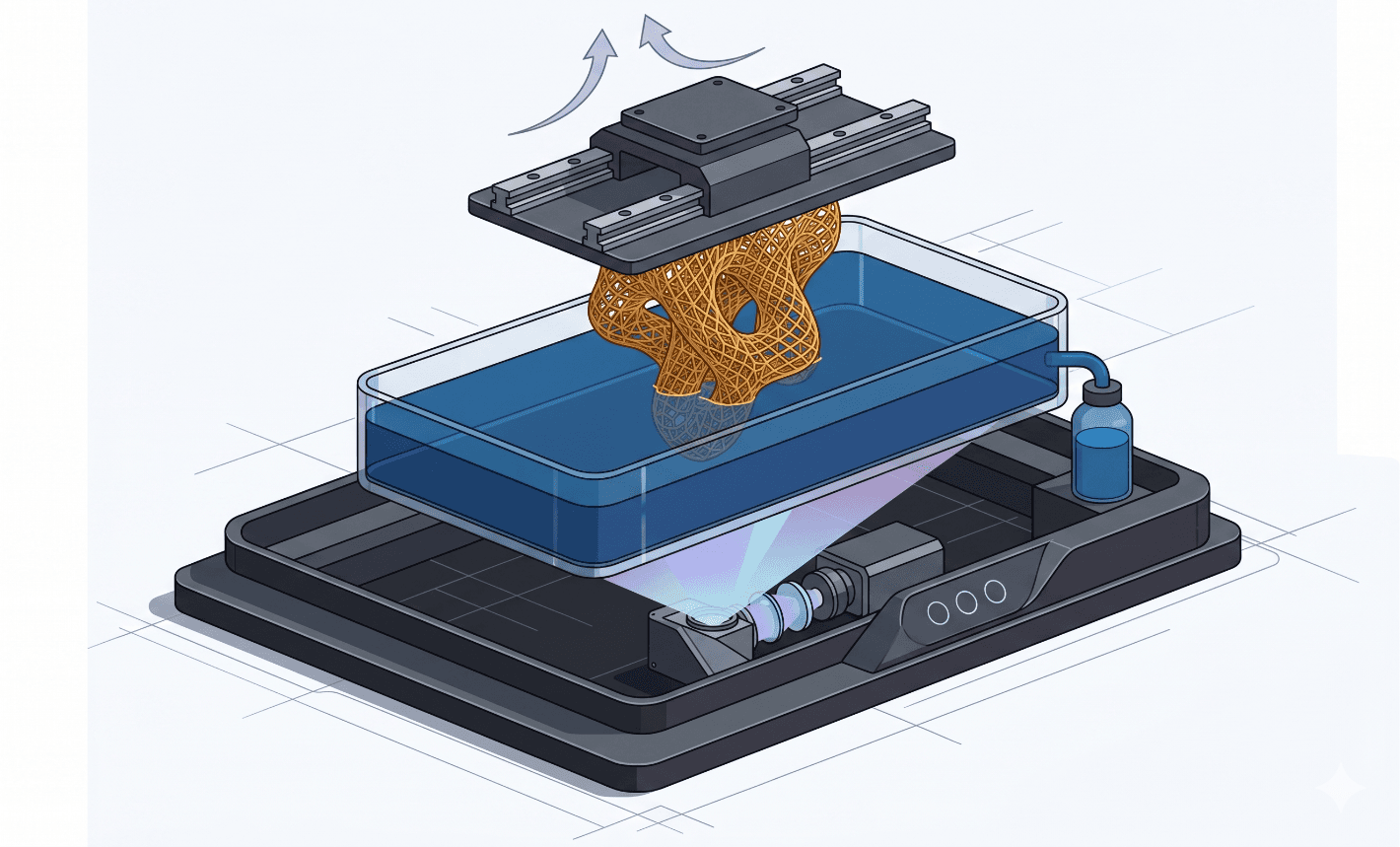
| SLA / DLP with FR resin | Small detailed terminal covers and electrical parts | Post-cure, long-term heat exposure and embrittlement |
Typical applications include power-module housings, connector covers, equipment ducts and data-center cable brackets. Additive manufacturing helps with rapid revisions and low-volume production, but released parts still require product-specific validation.
Four points for design and validation
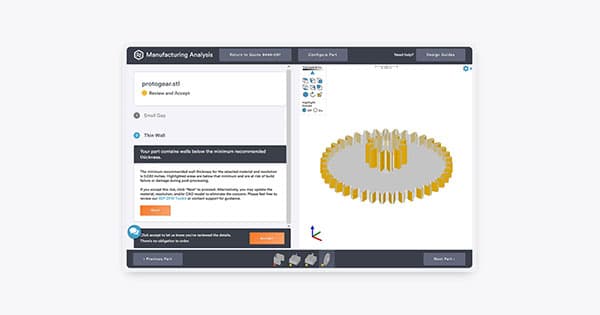
- Wall thickness: keep critical regions at or above the rated test thickness and include process tolerance.
- Orientation: do not place primary tensile loads across weak layer interfaces or supports on critical creepage and sealing surfaces.
- Finishing: paint, primer and adhesive may change the tested condition; verify compatibility or retest.
- Inspection: make parts and coupons from the same lot and record orientation, parameters and post-processing.
3D Printing: four checks before RFQ
- Function
State what the part must do and where it will be used
- Material and process
Name the required grade or performance range
- Design controls
Mark critical geometry, orientation and finishing
- Acceptance
Define dimensions, tests and required records
Recommended practice and common mistakes
| Recommended practice | Common mistake |
|---|---|
| Specify the UL 94 rating, exact grade and tested thickness together | Write only V-0 and assume it applies to every wall thickness |
| Define the product standard before selecting material and process | Choose a material from the word flame-retardant alone |
| Keep critical surfaces uncoated or use a documented coating | Assume a painted part retains the original V-0 data |
| Make parts and coupons from the same lot and process condition | Reuse a result from another lot or an old supplier coupon |
| Run first-article inspection and a small validation lot | Treat the datasheet as a finished-part guarantee |
- The drawing states the rating, material grade and applicable thickness
- CTI, FST and other application standards have been checked
- Orientation, supports, finishing and lot controls are agreed with the supplier
- Critical dimensions, electrical spacing and test methods are in the acceptance plan
- First-article and small-lot validation are planned before production
FAQ and further reading
Does a UL 94 V-0 material guarantee a V-0 finished part?
No. Check the exact grade, tested thickness, process, orientation and finishing, then test a representative coupon or part when required.
Is flame-retardant 3D printing suitable for production?
It works well for low volumes, frequent revisions and complex geometry. At higher quantities, compare unit cost, lot consistency and injection-molding tooling economics.
Can painted parts use the original V-0 data?
Do not assume so. A coating changes the surface and burn condition; use documented compatibility data or validate the finished condition.
Next, explore 3D printing services, materials, online quoting, and related guides to SLS materials and 3D-printing tolerances.