UV-Resistant Plastics for Outdoor Applications: A Selection and Validation Guide

Content in this Article
Plastics can look straightforward in CAD and still fail after printing, finishing or inspection. The useful question is not whether a process can make the geometry once, but whether the chosen material, orientation and acceptance method can deliver the required function repeatedly. This guide turns that decision into a practical review workflow.
- Define the operating environment, functional load, quantity and acceptance criteria before choosing a process.
- Treat dimensions and performance values as design-starting points; confirm the exact grade and supplier capability before release.
- Use a first article or pilot lot to lock inspection and process controls before scaling.
Start with requirements and process selection
How UV Actually Destroys a Polymer
UV photons in the 290–400 nm range carry 70–100 kcal/mol of energy — enough to cleave C–H, C–C, and C–O bonds in most thermoplastics. Three reactions dominate field failures: chain scission shortens molecular weight and embrittles the part; photo-oxidation lets oxygen attack radical sites and form chromophoric carbonyl groups (the yellow you see); photolysis of aromatic rings in PC, ABS, and PU produces quinoid structures that absorb visible light.
Different polymers fail differently. Aliphatic resins like PMMA and PVDF have no UV-absorbing aromatics and degrade slowly.
UV-Resistant Plastic Families
| Resin | Inherent UV | Tensile (MPa) | Service Temp (°C) | Relative Cost | Best For |
|---|---|---|---|---|---|
| ASA | Excellent | 45–55 | -30 to 85 | 1.3x ABS | Auto trim, housings |
| PMMA (acrylic) | Excellent | 65–75 | -40 to 80 | 1.5x ABS | Glazing, signage |
| PVDF | Outstanding | 35–55 | -40 to 150 | 6–8x ABS | Architectural film, chemical tanks |
| FEP / PFA | Outstanding | 20–30 | -200 to 200 | 12–20x ABS | Solar backsheet, optical |
| UV-stab. PC | Good (with HALS) | 60–70 | -40 to 120 | 2x ABS | Lenses, glazing (coated) |
Plastics: define requirements before selecting a process
Connect requirements, process decisions and inspection before the first build to reduce late design changes.
- 1Requirements
Function, service environment, quantity and failure risk
- 2Material and process
Material grade, build strategy, geometry and finishing
- 3Inspection
Critical dimensions, functional tests and lot records
Key design rules
Stabiliser Chemistries — Pick the Right Cocktail
There is no universal UV additive. HALS, UV absorbers, and pigments operate on different rungs of the photo-oxidation ladder, and the best formulations stack two or three.
| Approach | Mechanism | Typical Loading | Effective For | Limitations |
|---|---|---|---|---|
| HALS (Tinuvin 770/622) | Radical scavenger | 0.1–0.5% | PP, PE, PU, TPO | Inactivated by acidic pigments / sulfur |
| Benzotriazole UVA | UV absorber 300–380 nm | 0.2–1.0% | PC, ABS, PMMA, PET | Slight yellow tint at high load |
| Benzophenone UVA | UV absorber 280–340 nm | 0.1–0.5% | Cheap PE, PVC | Volatile, blooms |
| Carbon black (N550) | UV blocker + radical sink | 1–3% | Any non-aesthetic part | Black only |
| TiO2 (rutile) | UV scattering pigment | 2–5% | White outdoor parts | Surface chalking if anatase |
Thickness, Colour, and the Beer-Lambert Reality
UV penetration follows Beer-Lambert: a 3 mm ASA panel may absorb 95% of incident UV in the first 200 µm, leaving the bulk relatively safe. This is why thin-walled parts (<1.
關鍵設計動作: for any UV-critical part, run a 1 mm vs 3 mm coupon comparison through 1000 h of ASTM G154 before locking thickness. Specify pigment masterbatch by Pantone *and* lightfastness rating (BWS 6+ for outdoor), not just colour.
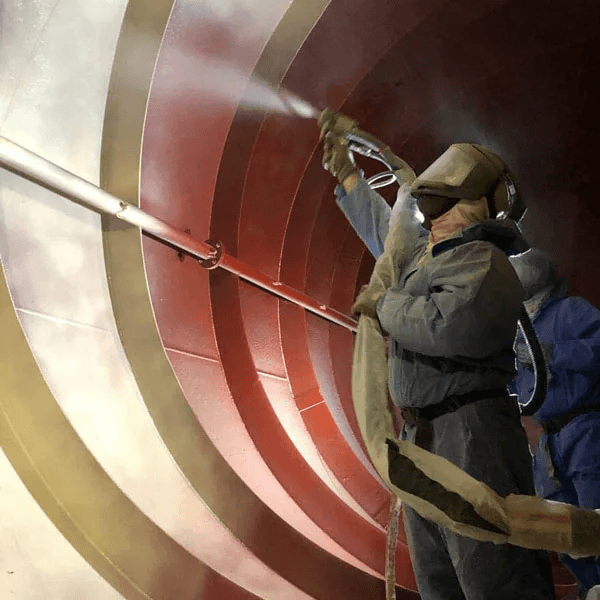
From prototyping and finishing to acceptance
Common Mistakes We See on RFQs
| Mistake | Why It Hurts | Better Move |
|---|---|---|
| Specifying 'UV stable PC' with no grade | Stabiliser package undefined — supplier picks cheapest | Name the grade (e.g. Makrolon 2407, Lexan 9034) |
| Reusing indoor ABS for outdoor housing | ABS yellows in 6–12 months unprotected | Switch to ASA or paint with 2K-PU |
| Trusting 1000 h xenon = 10 years | Correlation depends on geography and pigment | Add a real outdoor exposure rack at the deployment site |
| Adding HALS to PVC | Acidic HCl from PVC inactivates HALS | Use UVA only or switch base resin |
| Painting PP without flame treatment | Coating peels in 6 months | Flame or plasma treat to >38 dyne/cm before primer |
Plastics: four checks before RFQ
- Function
State what the part must do and where it will be used
- Material and process
Name the required grade or performance range
- Design controls
Mark critical geometry, orientation and finishing
- Acceptance
Define dimensions, tests and required records
Pre-RFQ review: recommended practice and common mistakes
| Recommended practice | Common mistake |
|---|---|
| Specify resin grade by suffix (e.g. ASA-UV, PC-UV2) | Assume any 'outdoor' label means certified |
| Demand weatherometer data per ASTM G155 or ISO 4892 | Accept supplier marketing without test reports |
| Use carbon black or TiO2 when colour permits | Choose fluorescent or pastel pigments for >5 yr outdoor |
| Add HALS + UVA combo for aromatic resins | Rely on a single additive for PC, ABS, PU |
| Coat fixed-resin parts with 2K-PU and surface treat | Spray solvent paint on untreated PP or PVDF |
- Defined target service life (years), exposure latitude, and orientation (vertical / horizontal / tilted)?
- Selected base resin family and named grade with UV-stabilised suffix?
- Specified additive package — HALS, UVA type, carbon black or TiO2 loading — in the BOM?
- Chosen pigment with documented BWS lightfastness ≥6 for outdoor?
- Set wall thickness ≥1.5 mm or added a sacrificial cap layer for thin sections?
FAQ, further reading and sources
What should you define first for Plastics?
Define the operating environment, functional load, quantity and acceptance criteria before choosing a process. Those requirements determine the material, design rules and inspection plan.
Can the typical values in this guide be released directly on a drawing?
No. Use them for early design, then confirm the exact grade, supplier capability, DFM response and first-article result.
What should be locked before scaling production?
Lock the material, process settings, orientation, finishing and inspection method. Confirm that different lots reproduce the first-article result before scaling.
Next, explore 3D printing services, materials, online quoting, and the related design guides linked below.