
Polycarbonate at a Glance
Polycarbonate (PC) is an amorphous thermoplastic with a glass-transition temperature near 150 °C, density of 1.20 g/cc, tensile strength around 65 MPa, and notched Izod impact that routinely exceeds 600 J/m. In plain language, it is the toughest transparent engineering plastic you can buy off the shelf, with light transmission of 88–92 % through a 3 mm wall.
The backbone is a carbonate ester linked to bisphenol-A, which gives PC a rare combination: glass-like clarity, the impact strength of a soft metal, and a service window that tolerates short excursions to 120 °C. Makrolon, Lexan and Sabic PC are the commercial resins you will encounter most often, with grades tailored for optics, flame retardance, UV exposure, or medical sterilisation.
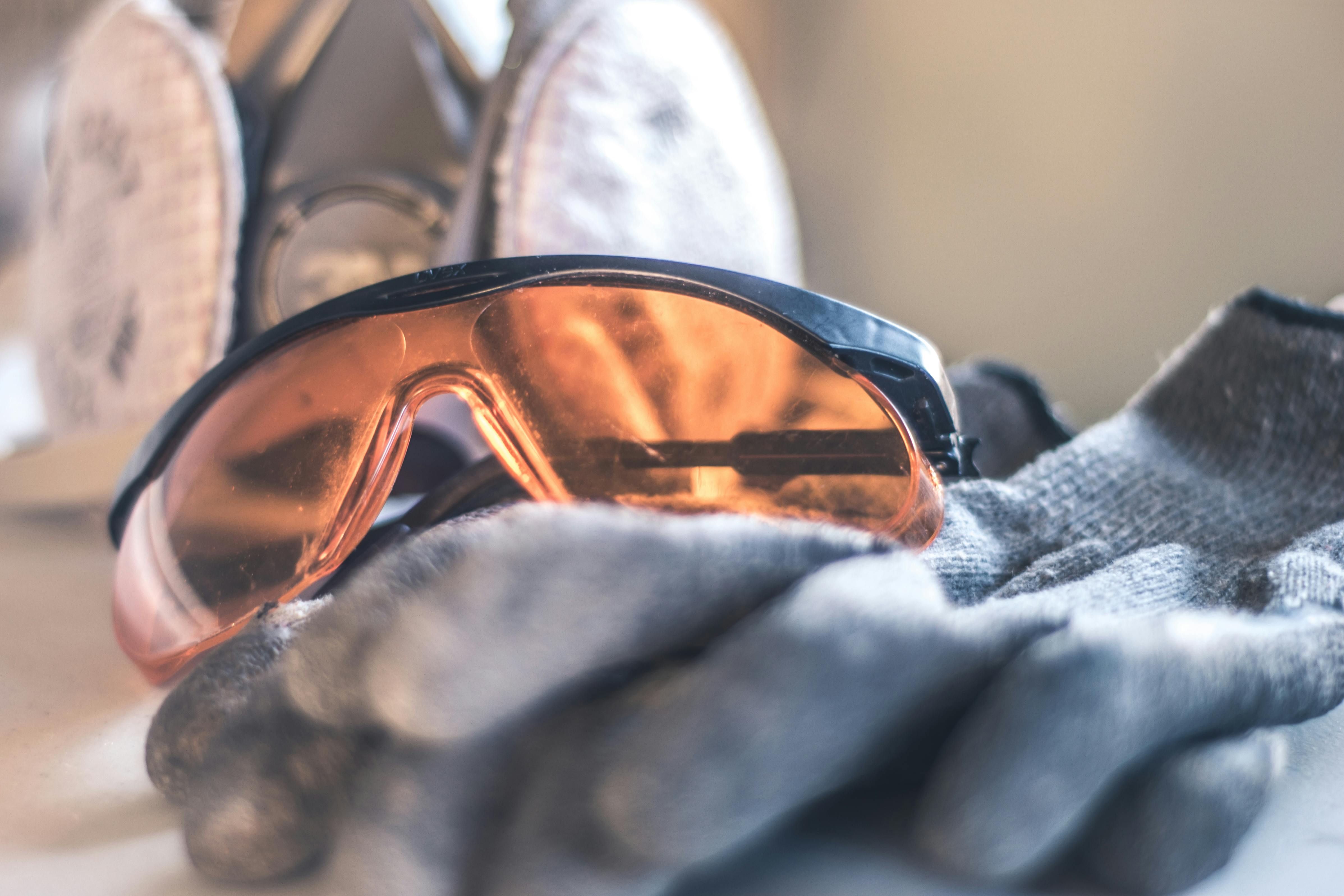
You will see PC wherever a part must be transparent and abuse-tolerant at the same time: safety eyewear, machine guards, EV battery housings, riot shields, medical equipment covers, and automotive headlamp lenses. It is not cheap (USD 4–7 per kg for commodity grades) but it replaces far more expensive glass and metal assemblies.
What PC is not: it is not scratch-resistant out of the mould (Rockwell R118, softer than acrylic) and it does not like aromatic solvents or strong alkalis. Designers who ignore those two facts spend the next revision chasing cracks and hazing.
Why Polycarbonate Earns a Place in Your BOM
Three properties justify PC on a bill of materials when cheaper plastics cannot. First, impact energy: a 3 mm PC sheet stops a 535 g steel ball dropped from 1.2 m without cracking, which is why it underpins ANSI Z87.1 safety eyewear and OSHA machine guards. Second, dimensional stability under heat: heat-deflection temperature of 135–140 °C at 0.45 MPa means a PC enclosure near a battery module will not warp during a 60 °C charge cycle the way ABS would.
Third, ignition behaviour. Flame-retardant grades such as Lexan 940 or 943 carry UL 94 V-0 listings at 1.5 mm, with glow-wire resistance that satisfies IEC 60695 requirements for EV and appliance housings. You get a single material that passes both mechanical abuse tests and safety-agency flame tests, which is uncommon in transparent polymers.
The trade-off is process discipline. PC must be dried to under 0.02 % moisture (typically 4 hours at 120 °C) before injection, and mould temperature should sit at 85–120 °C to avoid residual stress that later crazes under solvent contact. Factor in tooling and drying, not just resin price.
Per-Part Cost Against Its Closest Alternatives
For an 80 × 80 × 30 mm enclosure with a clear window, PC sits in the middle of the cost stack — more expensive than ABS but far cheaper than glass + metal assemblies. The table below assumes a 10 k-piece injection-moulded run or the equivalent CNC / 3D-print batch, using 2026 Asia-Pacific pricing from Orinovate's quoting engine.
| Material + Process | Per-part (USD) | Tooling (USD) | Lead Time | Best For |
|---|---|---|---|---|
| PC (IM, Makrolon 2407) | 0.80–2.40 | 8,000–18,000 | 4–6 weeks | Transparent production enclosures |
| PC FR V-0 (IM, Lexan 943) | 1.40–4.00 | 10,000–22,000 | 5–7 weeks | EV / appliance housings |
| ABS (IM) | 0.35–1.10 | 6,000–14,000 | 3–5 weeks | Opaque consumer enclosure |
| PMMA / Acrylic (IM) | 0.60–1.80 | 6,000–14,000 | 4–6 weeks | Display lens, not impact-rated |
| PC (CNC from sheet) | 35–120 | 0 | 3–7 days | Low-volume clear prototypes |
| PC-like SLA resin (3DP) | 40–150 | 0 | 2–4 days | Form-fit check, not production |
| Glass + aluminium bezel | 18–45 | 4,000–9,000 | 6–8 weeks | Outdoor kiosks, legacy designs |
Grade Matrix — Picking the Right PC Resin
PC grades diverge by melt-flow, additive package and certification, not by base chemistry. Choose flow index for your wall thickness, then layer on FR, UV or medical certification as required.
| Grade | MFR (g/10 min) | Notable Property | UL 94 | Best For |
|---|---|---|---|---|
| Makrolon 2407 | 19 | General-purpose optical | HB | Clear enclosures, 2–4 mm walls |
| Makrolon 2458 | 10 | Medical, gamma + EtO sterilisable | HB | Medical device housings |
| Lexan 943A | 7 | FR with high impact | V-0 at 1.5 mm | EV battery covers, switchgear |
| Lexan 141R | 10.5 | Standard industrial | HB | Machine guards, lighting |
| Makrolon 6555 | 6 | Weather-resistant, UV-stabilised | HB | Outdoor signage, headlamps |
| Makrolon Rx2530 | 29 | Lipid-resistant medical | HB | IV connectors, surgical housings |
| Lexan EXL | - | Silicone-copolymer, low-temp impact | V-0 possible | Handheld tools, aerospace interiors |
Which Process Suits Polycarbonate
PC is one of the few engineering plastics you can legitimately specify across injection moulding, CNC machining, sheet thermoforming and a few 3D-print variants. The right choice depends almost entirely on volume and optical quality.
| Process | Volume Fit | Surface Quality | Notes |
|---|---|---|---|
| Injection moulding | 2 k–10 M | Gloss, Ra < 0.05 μm possible | Requires hot mould 85–120 °C and pre-drying |
| CNC from cast sheet | 1–500 | Ra 0.4–1.6 μm, needs flame-polish for clarity | Watch for crazing at drilled holes |
| Thermoforming | 50–20 k | Matte to gloss, depending on sheet | Best for large covers, windshields |
| SLA (PC-like resin) | 1–50 | Clear after UV post-cure + polish | Not true PC — similar optics only |
| FDM PC filament | 1–20 | Layered, translucent at best | Functional prototypes, not optical |
| Extrusion (film / sheet) | Continuous | Optical-grade film available | Feedstock for secondary ops |

Picking by Use Case
Start from what the part must survive, then work backwards to grade and process. The matrix below pairs common product categories with a recommended combination, based on jobs Orinovate has quoted in the last twelve months.
| Use Case | Recommended Grade | Process | Why |
|---|---|---|---|
| Safety eyewear lens | Makrolon 2405 | IM + hard-coat | Impact + hard-coat for scratch |
| EV battery top cover | Lexan 943A | IM | V-0 flame + impact |
| Medical device window | Makrolon Rx2530 | IM | Lipid-resistant, sterilisable |
| Outdoor camera housing | Makrolon 6555 | IM + UV co-extrusion | Weather stability 10+ years |
| Machine guard 4 mm | Lexan 9034 | Thermoformed sheet | Large area, low volume |
| Handheld tool housing | Lexan EXL 9330 | IM | Low-temp impact to −40 °C |
| Transparent prototype | Makrolon 2407 rod | CNC + flame polish | Days to first part |
Design Rules That Reward Polycarbonate
Wall thickness should sit between 1.5 and 4.0 mm for injection-moulded PC. Below 1.5 mm you risk short shots because melt viscosity rises quickly below that wall; above 4.0 mm you introduce sink and internal stress that later crazes under solvent. Target a uniform wall within ±10 % of nominal and blend thickness changes with 3:1 tapers rather than steps.
Radius every corner, inside and out, with at least 0.5 × wall thickness. PC is tough but stress-sensitive — sharp internal corners concentrate stress and create the classic brittle fracture pattern you see in machine-guard failures. Draft angles of 1–1.5° per side work for textured walls; polished optical surfaces can run 0.5°.
Design for drying and gating. A transparent lens gate should be a sub-gate or hot-tip near a non-visible edge; cold slug wells matter because any contamination shows through. Finally, avoid metal inserts in direct contact with the hottest PC zones without a stress-relief anneal — the CTE mismatch (PC at 68 × 10⁻⁶ /°C, steel at 12) will crack the part after thermal cycling.
Surface Finishes and Post-Processing
Straight-off-the-mould PC is scratch-prone, so most production parts receive a siloxane-based hard coat dipped or flow-coated to roughly 3–5 μm thickness, then UV cured. This raises surface hardness from R118 to pencil 2H–3H and is standard on safety eyewear and headlamp lenses.
For transparent CNC prototypes, plan for flame polishing on cut edges (hydrogen-oxygen flame for 2–3 seconds per linear inch) or vapour polishing with methylene chloride — the latter recovers optical clarity but adds a controlled-exposure step. Painted PC housings require a polyurethane primer; do not apply solvent-based enamels directly or you will see immediate crazing.
Anti-fog coatings, anti-reflective stacks, EMI shielding (vacuum-deposited aluminium + top coat) and laser marking are all compatible. Ultrasonic welding joins PC to itself or to ABS alloys reliably at 20 kHz, 35–45 micron amplitude; adhesive bonding uses cyanoacrylates or 2K epoxies — avoid cyanoacrylate on clear parts because blooming ruins optics.
Application — ANSI Z87.1 Safety Eyewear for a US Industrial Brand
A US industrial-safety brand needed a lens that cleared ANSI Z87.1+ high-velocity impact and had anti-fog for food-processing workers. We specified Makrolon 2405 in a two-cavity tool with a hard-coat + anti-fog stack applied post-mould. Lens weight came in at 8.2 g, 2.3 mm nominal wall.
Tooling cost USD 22 000, split across two cavities with a submarine gate at the temple tab. Per-part moulded cost was USD 0.94 at 120 k annual, coated cost USD 1.62. The hard-coat step added 24 hours of cycle time per batch but lifted pencil hardness from HB to 2H and passed 500 cycles of Bayer abrasion without haze above 8 %.
Total programme cost from kick-off to first shipment was USD 68 000 and ten weeks, including ANSI Z87.1 accredited testing at an external lab. The customer is now on their third lens geometry with the same tool base.

Application — EV Battery Pack Top Cover with V-0 Flame Rating
A Tier-2 EV supplier replaced a sheet-metal battery cover with an injection-moulded Lexan 943A part on a 60 kWh pack. The cover spans 480 × 320 × 45 mm with a nominal 3.0 mm wall, six moulded-in bosses, and co-moulded TPE gasket. Unit mass dropped from 2.9 kg (stamped steel + gasket + paint) to 0.78 kg.
The critical spec was UL 94 V-0 at 1.5 mm plus IEC 60695 glow-wire 960 °C. Lexan 943A passed both in first-article testing. Tooling was USD 62 000 across a single-cavity hot-runner mould with sequential valve gates. Per-part cost at 40 k annual was USD 3.85 including the TPE overmould, versus USD 11.20 for the stamped-and-painted incumbent.
Payback on tooling came in 14 weeks once harness routing was revised to take advantage of the moulded-in clips. Over a 3-year programme the supplier saved USD 740 000 plus the weight reduction that added approximately 6 km to pack-level range.
Application — Transparent Medical Device Window, Class II
A respiratory-therapy OEM needed a 2 mm transparent window for a ventilator humidifier that would sterilise by ethylene-oxide 200 cycles and resist lipid contamination from anaesthetic oils. We specified Makrolon Rx2530 — the medical grade engineered precisely for this duty.
Validation runs used a single-cavity tool at USD 14 500, per-part cost USD 1.15 at 50 k annual. Optical transmission measured 89.3 % at 550 nm after 200 EtO cycles, versus 86.1 % for a reference Makrolon 2407 control that showed visible haze at cycle 120. ISO 10993-5 cytotoxicity and USP Class VI biocompatibility passed on first submission.
Programme total was USD 48 000 and eleven weeks, including lot-traceability documentation and a GMP-compliant mould clean-down protocol. The window is now on its second production year with zero field returns related to haze or cracking.
Do and Don't When Specifying Polycarbonate
| Do | Don't |
|---|---|
| Specify drying to < 0.02 % moisture with 4 h at 120 °C on the drawing | Assume the moulder will 'handle moisture' without it being a requirement |
| Call out UL 94 rating AND thickness at which it was measured | Write 'flame retardant' without specifying rating, thickness, and UL file |
| Specify gate location away from optical zones | Accept a centred gate on a cosmetic lens because tooling is cheaper |
| Order a hard-coat on any part exposed to hands or cleaning | Ship raw PC on a user-touched surface and hope for the best |
| Design radii ≥ 0.5 × wall on every corner | Carry over a sharp-cornered ABS design straight into PC |
| Use Rx- or Rx-plus grades for any medical fluid-path part | Substitute a general-purpose optical grade to save on resin cost |
Common Mistakes and How to Avoid Them
| Mistake | Why It Fails | How to Avoid |
|---|---|---|
| Skipping resin drying | Moisture hydrolyses PC chains → brittle, silver streaks | Log dryer dew point, require < −40 °C at 120 °C for 4 h |
| Sharp internal corners | Stress concentration + solvent contact = cracking | R ≥ 0.5 × wall, preferably 1.0 × on load-bearing ribs |
| Cleaning with IPA near bonded seams | PC crazes in isopropanol and most ketones | Qualify cleaners on test coupons; use mild detergent + DI water |
| Metal threaded inserts pressed cold | CTE mismatch cracks boss after thermal cycles | Use ultrasonic or heat-staked inserts with stress-relief anneal |
| Choosing 'clear' resin without UV grade outdoors | Yellowing Δb > 5 at 1 year in UVA | Specify Makrolon 6555 or equivalent UV-stabilised PC |
| Bonding with cyanoacrylate on optical face | CA blooming creates white fog on lens | Use 2K epoxy or UV-cure acrylic adhesive rated for PC |

Pre-Order Checklist for a Polycarbonate Part
- Confirm the grade, melt-flow index and supplier lot code on the drawing, not just 'PC'.
- Specify UL 94 rating plus the thickness at which it must hold (e.g. V-0 at 1.5 mm).
- Call out drying conditions: moisture < 0.02 % via 4 h at 120 °C with dew point < −40 °C.
- Define optical spec if transparent: transmission %, haze %, and measurement wavelength.
- Specify all corner radii ≥ 0.5 × wall and draft ≥ 1° on textured faces.
- List any sterilisation, UV exposure or chemical cleaners the part will see in service.
- Choose gate type (sub, tunnel, hot-tip) and location outside cosmetic zones.
- Sign off on hard-coat, anti-fog, UV, or print spec, including adhesion and abrasion tests.
Design Takeaways
Polycarbonate is the default answer when you need transparent toughness at engineering-plastic prices. It earns its premium over ABS and PMMA by shrugging off impacts those resins cannot survive, but only if you respect three non-negotiables: dry the resin, round every corner, and keep the wrong solvents away from it.
Specify the grade by name, call out UL 94 at the correct thickness, and budget for a hard-coat on any surface a human will touch. Do that and PC will outlast the product it protects; skip any one step and you will find yourself re-tooling in six months.